



When an 18-wheeler collides with a passenger vehicle on Louisiana highways, the aftermath extends far beyond a typical fender bender. The injuries tend to be severe, the legal process becomes exponentially more complex, and the stakes for everyone involved rise dramatically. Understanding these differences can mean the difference between recovering full compensation and settling for far less than your claim is worth.
This guide breaks down what makes truck accident claims in Louisiana fundamentally different from standard car accident cases—and why having the right legal team matters from day one.
Key Takeaways
Truck accident claims involve federal FMCSA regulations, multiple potential defendants, and insurance policies often reaching $750,000 to $5 million, creating far more complexity than typical car crashes with Louisiana’s minimum 15/30/25 coverage.
Louisiana personal injury claims have strict deadlines—accidents occurring before August 1, 2024 fall under a one-year prescriptive period, while those after may have two years, but acting quickly remains critical to preserve electronic evidence.
Cueria Law Injury Lawyers focuses on serious truck crashes throughout the greater New Orleans area and Louisiana, securing black box data, driver logs, and maintenance records before trucking companies can alter or destroy them.
Trucking companies deploy rapid-response teams within hours of crashes to build defenses, making early attorney involvement essential to level the playing field.
Free consultations are available, and Cueria Law Injury Lawyers operates on contingency—meaning no fees unless they recover compensation for clients.

What Makes Truck Accident Claims Different from Car Accidents in Louisiana?
Picture a minor collision between two sedans on Canal Street or Veterans Boulevard. Drivers exchange insurance information, file claims, and typically resolve matters within weeks. Property damage gets repaired, minor injuries heal, and life moves forward.
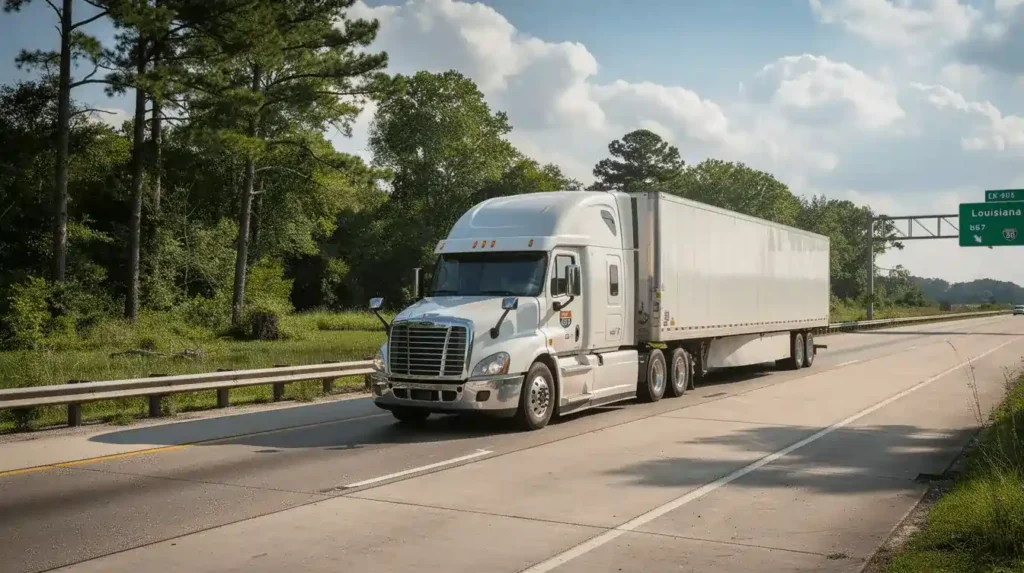
Now consider an 18-wheeler crash on I-10 near New Orleans. A fully loaded semi truck weighing up to 80,000 pounds strikes a 4,000-pound passenger vehicle at highway speeds. The physics alone—trucks carrying 20 times the mass of cars—generate catastrophic forces that can cause traumatic brain injuries, spinal cord damage, amputations, and death at rates four times higher than standard car accidents.
Federal Regulations Add Layers of Complexity
Unlike most passenger car drivers who simply follow Louisiana traffic laws, truck drivers and motor carriers must also comply with extensive federal regulations issued by the Federal Motor Carrier Safety Administration (FMCSA). These rules govern:
Hours-of-service limits: Drivers cannot exceed 11 hours of driving after 10 consecutive off-duty hours, all within a 14-hour window
Electronic logging devices (ELDs): Mandatory since 2017, these track real-time hours and flag violations
Driver qualification files: Three-year MVR history, drug testing, and training certifications
Vehicle maintenance standards: Regular inspections and documented repairs under 49 CFR 396
Load securement requirements: Specific protocols for cargo weight and distribution
Personal injury law in truck cases requires understanding both state negligence principles and this federal regulatory framework.
Multiple Parties May Share Liability
A car accident typically involves two drivers and their respective insurance policies. Truck accidents often involve a web of potentially liable parties:
|
Potential Defendant |
How They May Be Liable |
|---|---|
|
Truck driver |
Direct negligence (speeding, fatigue, distraction) |
|
Motor carrier |
Vicarious liability, negligent hiring/supervision |
|
Trailer owner |
Failure to maintain trailer equipment |
|
Freight broker |
Pressuring unrealistic delivery schedules |
|
Maintenance shop |
Faulty repairs contributing to mechanical failure |
|
Parts manufacturer |
Defective brakes, tires, or safety systems |
Insurance Coverage Changes Everything
Louisiana requires passenger vehicles to carry minimum liability coverage of $15,000 per person/$30,000 per accident for bodily injury and $25,000 for property damage. Many drivers carry only these minimums.
Commercial trucks operating in interstate commerce must carry minimum liability coverage of $750,000 per vehicle—and haulers of hazardous materials require up to $5 million. This substantial coverage means insurance companies assign teams of adjusters and attorneys to aggressively defend claims from the outset. The higher the policy limit, the harder insurers fight.
Common Causes of Truck Accidents on Louisiana Roads
Louisiana’s freight-heavy infrastructure creates elevated risks for serious collisions. The Port of New Orleans, petrochemical refineries between Baton Rouge and New Orleans, and major interstate corridors see over 10,000 trucks daily. Louisiana Department of Transportation data shows trucks comprise 12% of vehicles but account for 20% of fatal crashes, with 142 truck-involved fatalities statewide in 2023.

Leading Causes Specific to Trucking
Fatigued or over-hours driving: NHTSA studies implicate driver fatigue in 13-19% of large truck crashes, often involving falsified logs through “ghost rides” or multiple logbooks
Distracted driving: Cell phones, onboard computers, and GPS systems contribute to approximately 14% of incidents
Speeding to meet deadlines: FMCSA data shows speeding factors into 24% of truck crashes, often driven by tight delivery schedules
Improper lane changes: Elevated expressways and blind spots on large vehicles create dangerous circumstances
Following too closely: Trucks require 150-200 feet to stop at 65 mph compared to 100-120 feet for cars
Louisiana-Specific Risk Factors
The state’s geography and climate create unique hazards:
Heavy rain and fog on the Bonnet Carré Spillway reducing visibility to under 100 feet
Hurricane evacuations swelling I-10 traffic by 30% or more
Congested petrochemical corridor traffic
Hydroplaning conditions from sudden storms, like those following Hurricane Ida’s 2021 remnants
Equipment and Loading Failures
Federal inspections reveal that 25% of commercial trucks have brake violations. Crashes caused by equipment failures include:
Brake system failures: Neglected air brakes and worn components
Tire blowouts: Bald or improperly inflated tires
Unsecured cargo: Loads shifting on curves like I-610 ramps or Westbank Expressway
Overloaded trailers: Exceeding the 80,000-pound gross vehicle weight limit affects handling and stopping distance
The tractor trailer configuration—where the front half with the engine connects to heavy trailers via a fifth wheel coupling—creates unique dynamics. When something goes wrong with this equipment, the consequences can be devastating.
Underride and Override Crashes
Among the most lethal crashes are underride collisions, where a smaller vehicle slides beneath a trailer, and override accidents, where a truck runs over a passenger car. These crashes kill over 300 people annually nationwide, with Louisiana seeing dozens each year due to high truck volumes. Many trailers lack adequate underride guards intended as a safe place between vehicles.

Unique Evidence in a Louisiana Truck Accident Case
Truck crashes generate terabytes of digital data that simply don’t exist in standard car accidents. This evidence can prove what happened in the moments before a collision—but it can also disappear quickly without fast legal action.
Critical Evidence Types
Electronic Control Module (Black Box) Data The truck’s ECM records pre-crash events at one-second intervals for speed and up to 5 Hz for braking. This data captures:
Vehicle speed
Brake application timing
Throttle position
Seatbelt use
Engine performance metrics
NHTSA notes that black box data clarifies fault in 40% of disputed cases. However, this information may cover only the last 72 hours and can be overwritten when vehicles are repaired.
Electronic Logging Device Records ELDs transmit real-time hours-of-service data via satellite, flagging violations of FMCSA rules including the 70-hour weekly cap. This evidence can prove a driver was operating beyond legal limits when the crash occurred.
Driver Qualification Files Motor carriers must maintain DQFs documenting:
Three-year MVR history
Pre-employment drug test results (FMCSA requires 5-panel testing)
Training certifications
Prior violations or accidents
FMCSA data indicates 20% of carriers have DQFs with serious infractions, potentially supporting negligent hiring claims.
Supporting Documentation
Additional evidence in personal injury cases involving trucks includes:
Bills of lading: Cargo weights and securement methods
Trip sheets and fuel receipts: Prove actual routes versus logged routes
Dispatch communications: Text messages or emails pressuring drivers to speed
GPS telematics: Exact positions and speeds throughout the journey
Maintenance records: DOT inspection history showing patterns of ignored repairs
Preservation Is Critical
ELD data can overwrite after 30-60 days. Federal law requires carriers to retain records for six months to two years, but companies sometimes purge them prematurely. Cueria Law Injury Lawyers sends preservation letters and files court motions in Orleans Parish Civil District Court or other Louisiana courts when necessary to prevent trucking companies from destroying or altering evidence.
Liability and Multiple Defendants in Louisiana Trucking Cases
Determining responsibility in a truck crash differs substantially from a standard rear-end collision between two cars on St. Charles Avenue. The web of relationships in commercial trucking creates multiple potential sources of recovery.

Potentially Liable Parties
The Truck Driver Direct negligence claims arise from speeding, distracted driving, impairment, or fatigue. Personal injury attorneys examine whether the driver’s actions breached the standard of care.
The Motor Carrier Under Louisiana Civil Code 2320 and the doctrine of respondeat superior, motor carriers bear vicarious liability for employees acting in the course and scope of employment. Delivering freight clearly qualifies. Even drivers labeled as “independent contractors” may trigger carrier liability under FMCSA leasing rules when carriers control operations.
Third-Party Entities
Trailer owners: Separate from the tractor, trailers may have different owners responsible for maintenance
Freight brokers: Under 49 USC 14704, brokers pressuring unrealistic schedules may share liability
Shippers: Improper loading or failure to disclose cargo characteristics
Maintenance shops: Negligent repairs contributing to mechanical failures
Negligent Hiring, Retention, and Supervision
Beyond direct negligence, motor carriers face claims for:
Hiring drivers with disqualifying violations
Retaining drivers after accidents or violations
Failing to supervise through telematics alerts
Providing inadequate training
The best law firm handling these cases investigates the carrier’s safety history through FMCSA’s Safety Measurement System, which rates carriers as conditional or probable violators.
Product Liability
When defective truck components contribute to crashes, Louisiana’s redhibition laws allow strict liability claims against manufacturers. Common defects include:
Tire tread separation at highway speeds
Brake system failures
Defective coupling equipment
Damages in a Louisiana Truck Accident Claim
The catastrophic nature of truck crashes—caused by the sheer physics of a vehicle 20 times the mass of a car—means available damages typically exceed those in standard car accidents. Survivors of truck collisions suffer traumatic brain injuries at rates of 25%, according to CDC data, along with spinal cord damage, multiple fractures, and amputations.
Economic Damages
These quantifiable losses include:
|
Category |
Description |
|---|---|
|
Medical bills |
Past and future treatment at facilities like University Medical Center, Ochsner, or Baton Rouge General; TBI lifetime costs average $1-5 million |
|
Lost wages |
Truck crash victims typically miss 6-12 months of work during recovery |
|
Diminished earning capacity |
Vocational experts project 30-50% earnings losses for seriously injured workers |
|
Rehabilitation costs |
Physical therapy, occupational therapy, cognitive rehabilitation |
|
Home modification expenses |
Wheelchair ramps, bathroom modifications ($50,000+) |
Non-Economic Damages
These subjective losses compensate for harm that cannot be calculated through receipts:
Physical pain and suffering
Mental anguish and emotional distress
Loss of enjoyment of life
Disfigurement and scarring
Loss of consortium for spouses
Pre-trial valuations often apply multipliers of 3-5 times economic damages, though each case depends on specific circumstances.
Punitive Damages
Under Louisiana Civil Code 2315.4, punitive or exemplary damages remain rare but may apply in egregious circumstances. Examples include truck drivers operating while intoxicated (FMCSA sets the commercial driver BAC limit at 0.04) or carriers knowingly sending unsafe trucks onto highways. These damages are awarded in approximately 5-10% of the most serious cases.
Documenting Long-Term Losses
Cueria Law Injury Lawyers works with medical experts, vocational rehabilitation specialists, and economists to develop life care plans projecting long-term costs. This thorough documentation supports injury claims valued at millions of dollars when circumstances warrant.
Louisiana Deadlines and Procedures After a Truck Crash
Louisiana’s prescriptive periods are shorter than many states, creating urgency for truck crash victims to protect their rights. Delays can result in lost evidence and forfeited claims.
Statute of Limitations
The deadline for filing personal injury claims in Louisiana has recently changed:
Accidents before August 1, 2024: One-year prescriptive period under Louisiana Civil Code Article 3492
Accidents on or after August 1, 2024: Two-year prescriptive period under updated state law
For a wrongful death claim arising from a truck accident, similar time limits apply. Missing these deadlines typically bars recovery entirely.
Post-Crash Steps
Seek Emergency Medical Treatment Even if injuries seem minor, TBIs and internal injuries may not present symptoms immediately. Visit an emergency room or urgent care facility and document all treatment.
File a Police Report Contact Louisiana State Police Troop B or local law enforcement. Commercial vehicle citations in the report can support your claim.
Notify Your Insurance Report the accident to your own insurer, but limit your statement to basic facts.
Contact a Truck Accident Attorney Personal injury litigation involving trucks requires specialized knowledge. Contact a lawyer before giving recorded statements to the trucking company’s insurer.
Protecting Your Claim
Do not:
Give recorded statements to the trucking company’s insurance company
Sign medical authorizations allowing access to your full medical history
Accept early settlement offers before understanding the full extent of your injuries
Do:
Document your injuries with photographs
Keep records of all medical bills and expenses
Follow your healthcare providers’ treatment recommendations
Cueria Law Injury Lawyers handles the entire claims process—from gathering records and communicating with insurers to filing suit in Jefferson Parish, Orleans Parish Civil District Court, or other Louisiana courts when needed.
How Cueria Law Injury Lawyers Handles Louisiana Truck Accident Cases
Cueria Law Injury Lawyers is a Louisiana personal injury firm focused on representing people hurt by negligent truck drivers and motor carriers—not insurance companies. The firm represents clients throughout the Orleans area and across Louisiana who have suffered serious harm in truck collisions.

Investigation and Evidence Preservation
The team moves quickly after a crash to:
Send a letter stating that all evidence must be preserved to trucking companies and insurers
Coordinate independent inspections of the truck and trailer
Obtain traffic camera footage before it’s automatically deleted
Interview witnesses while memories remain fresh
Document the scene with photographs and drone footage when available
Expert Resources
When fault is disputed or crashes involve multi-vehicle pileups on interstates like I-10 or I-12, the firm works with:
Accident reconstruction specialists who model vector forces and impact dynamics
Trucking safety consultants familiar with FMCSA regulations
Medical professionals who can testify about injury causation and prognosis
Economists who project lifetime costs and lost earning capacity
The ability to deploy these resources distinguishes highly skilled personal injury lawyers from general practitioners.
Negotiation and Trial Preparation
The firm negotiates aggressively with commercial insurers, but prepares every serious truck case for trial. Average settlements range from $100,000 to over $1 million, with Louisiana verdicts reaching $20 million or more in catastrophic cases. Insurers who lowball initial offers understand that Cueria Law Injury Lawyers has the reputation and resources to take cases to verdict.
Fee Structure
The firm operates on a contingency fee basis:
No upfront costs or hourly fees
Attorney fees are a percentage of the recovery
If there’s no recovery, clients pay no attorney fees
Free consultations are available by phone or at the firm’s locations for injured drivers, passengers, and families who lost loved ones in truck collisions. The team can represent clients in personal injury cases throughout Louisiana, with particular experience on roads and highways in the greater New Orleans area.
FAQ
How soon should I contact a lawyer after a truck accident in Louisiana?
Contact a truck accident lawyer as soon as your immediate medical needs are stable—ideally within days of the crash. Electronic logging device data can overwrite after 30-60 days, and some trucking companies have been known to repair or scrap vehicles before evidence can be preserved.
Early involvement allows Cueria Law Injury Lawyers to send preservation letters immediately, coordinate independent inspections of the vehicle and its equipment, and handle all communications with trucking and insurance companies from the start. Young people and experienced drivers alike benefit from this protection.
What if I was partially at fault for the truck crash?
Louisiana follows a pure comparative fault system under Louisiana Civil Code 2323. This means your compensation is reduced by your percentage of fault, but you’re not completely barred from recovery.
For example, if you’re found 20% at fault for the crash, you can still recover 80% of your damages. Even if you believe you may have contributed to the accident—perhaps by changing lanes or driving slightly over the speed limit—have your case evaluated. The truck driver or trucking company may bear the majority of responsibility, and you deserve to understand your options.
Can I sue the trucking company if the driver was an “independent contractor”?
In many Louisiana trucking cases, motor carriers still bear responsibility even when they label drivers as independent contractors. FMCSA regulations under 49 CFR 376 can establish “statutory employee” status when carriers control operations, routes, and schedules.
Personal injury attorneys at Cueria Law Injury Lawyers review contracts, FMCSA filings, and insurance policies to determine whether the trucking company can be held liable despite independent contractor language. The law often looks past these labels to the reality of the working relationship.
What if the truck that hit me was from another state?
Out-of-state motor carriers and drivers regularly operate on Louisiana roads and can generally be sued here if the crash occurred in Louisiana. Long-arm jurisdiction allows Louisiana courts to hear claims against companies that do business in the state.
Cueria Law Injury Lawyers has experience bringing claims against national trucking companies and coordinating service of process through their registered agents within Louisiana. The firm’s practice areas include handling complex multi-state trucking litigation.
How long does a Louisiana truck accident case usually take?
Timelines vary significantly based on several factors:
Severity of injuries and length of medical treatment
Number of defendants involved
Complexity of liability issues
Whether the case settles or proceeds to trial
Many serious truck cases take anywhere from several months to a few years. Rushing to settle before the full extent of injuries and future medical needs is known often results in inadequate compensation. The firm balances timely resolution with a complete assessment of long-term damages so clients achieve the success they deserve.
If you or a loved one has been injured in a truck accident on Louisiana roads, time is critical for preserving evidence and protecting your claim. The trucking company’s team is already building their defense—don’t let them stand unopposed.
Contact Cueria Law Injury Lawyers today for a free consultation. Call or reach out through the firm’s contact form to speak with professional personal injury attorneys who understand what it takes to recover compensation from trucking companies and their insurers. There’s no fee unless the firm recovers money for you.